
A clean board. A calmer kitchen.
A cutting board touches almost everything we eat: raw meat, fish, vegetables, bread, fruit for the kids. Yet it is one of the few kitchen tools most of us replace only when it cracks. When I started reading about how bacteria hide in scratches and soft surfaces, I realised my board was the weakest link in an otherwise careful kitchen.
I didn't want to become obsessive about it. I wanted a few simple habits that would hold up on a busy Tuesday night. Three things ended up mattering most.
The day I looked closely at my old board
My old board was a pretty wooden one I had owned for years. One evening, under the kitchen light, I noticed how dark the knife marks had become and how the smell of onion and garlic stayed no matter how much I scrubbed. Before that I had a plastic board that went through the dishwasher, but it was covered in fuzzy cuts that never looked quite clean either.
So I started reading. Food safety guidance is surprisingly consistent: deeply scratched boards are harder to sanitise, porous surfaces can hold moisture and residue, and using separate boards for raw proteins and fresh produce is one of the easiest ways to reduce cross-contamination at home.
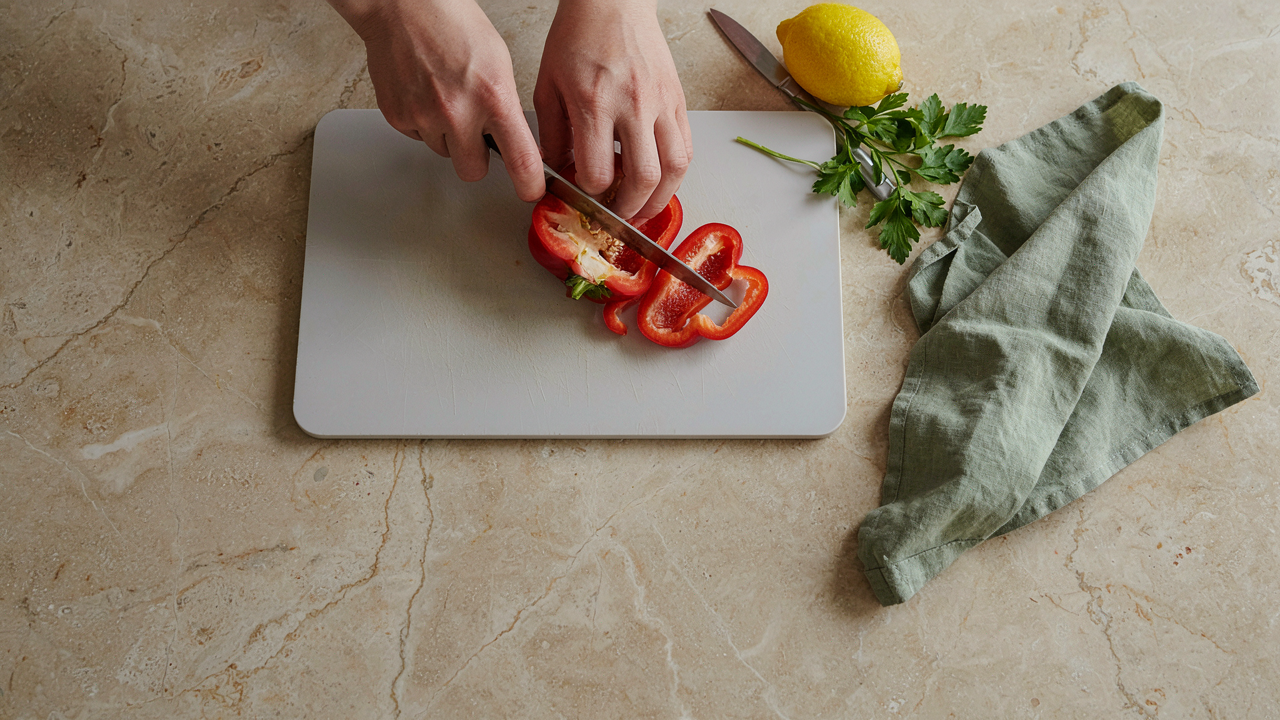
No board makes a kitchen sterile, and no material replaces good habits. Wash your hands, keep raw meat apart, cook food to safe temperatures and replace any board that is badly worn. If someone in your home has a weakened immune system, is pregnant, very young or elderly, it is worth asking your doctor about extra food safety steps.
What to look for in a hygienic cutting board
Whatever you choose, these are the questions I now ask before bringing a new board into my kitchen:
Is the surface non-porous? Juices and residue should sit on top and rinse away, not soak in. Soft or porous materials need much more care to stay clean.
Does it resist deep scratches? Every groove is a place where food and moisture can collect. A surface that scars less is easier to keep hygienic over time.
Is it easy to clean and dry? If it needs oiling, special products or a long routine, I know I won't keep up with it. Hot water, soap and a quick dry should be enough.
Can I keep raw and ready-to-eat food apart? Two boards, or a clearly separate side, make cross-contamination much less likely.
Is it available where I live? Many kitchen products only ship to certain countries, so check before you get attached.
My current pick
After comparing a few options against the checklist above, this is the board I'm using right now.
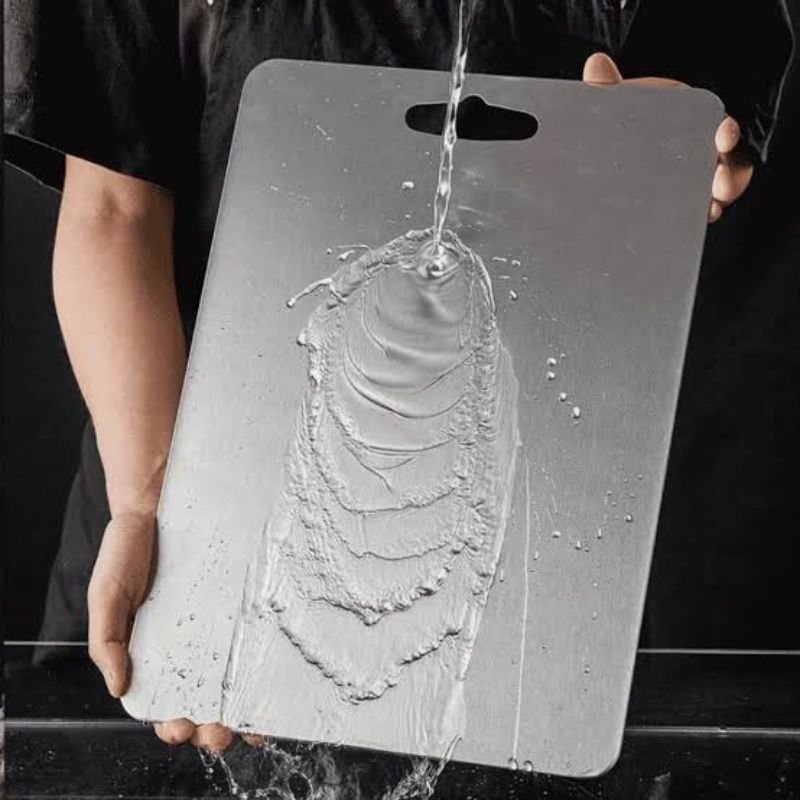
Katori Pure Titanium Cutting Board
A double-sided board made from pure titanium. The surface is non-porous, so juices and residue rinse right off instead of sinking into the board, and there is no plastic to wear down into small particles. It is also designed to be gentle on knives, which was my main worry with metal and glass boards.
- Non-porous surface that resists odors and stains
- Double-sided, so raw meat and fresh produce can stay apart
- Plastic-free, dishwasher-safe and needs no oiling
- Ships to the United States; check availability for your country on the official page
Experiences vary from kitchen to kitchen. Any board works best alongside good habits: separate surfaces, hot soapy water and letting everything dry fully.
More picks coming
I update this guide as I try new options. Here is where the next recommendations will go.
Questions I get asked
Is wood or plastic more hygienic?
Both can be used safely when they are in good condition and cleaned properly. The problem starts when either one is deeply scratched, cracked or stays damp. Whatever you use, replace it once it is badly worn.
How often should I replace my cutting board?
There is no fixed date. I replace a board when it has deep grooves that don't come clean, a smell that won't wash out, or any cracks.
Do I really need separate boards?
It is one of the simplest ways to reduce cross-contamination. Keep one board or one side for raw meat, poultry and fish, and another for food that won't be cooked.
Why do you recommend products at all?
Because readers ask. I only feature products I would consider for my own kitchen, and I tell you when a link earns a commission.
Disclosure: This page contains affiliate links. If you buy through them we may earn a commission at no extra cost to you. This content is for general information only and does not replace official food safety guidance or professional advice.