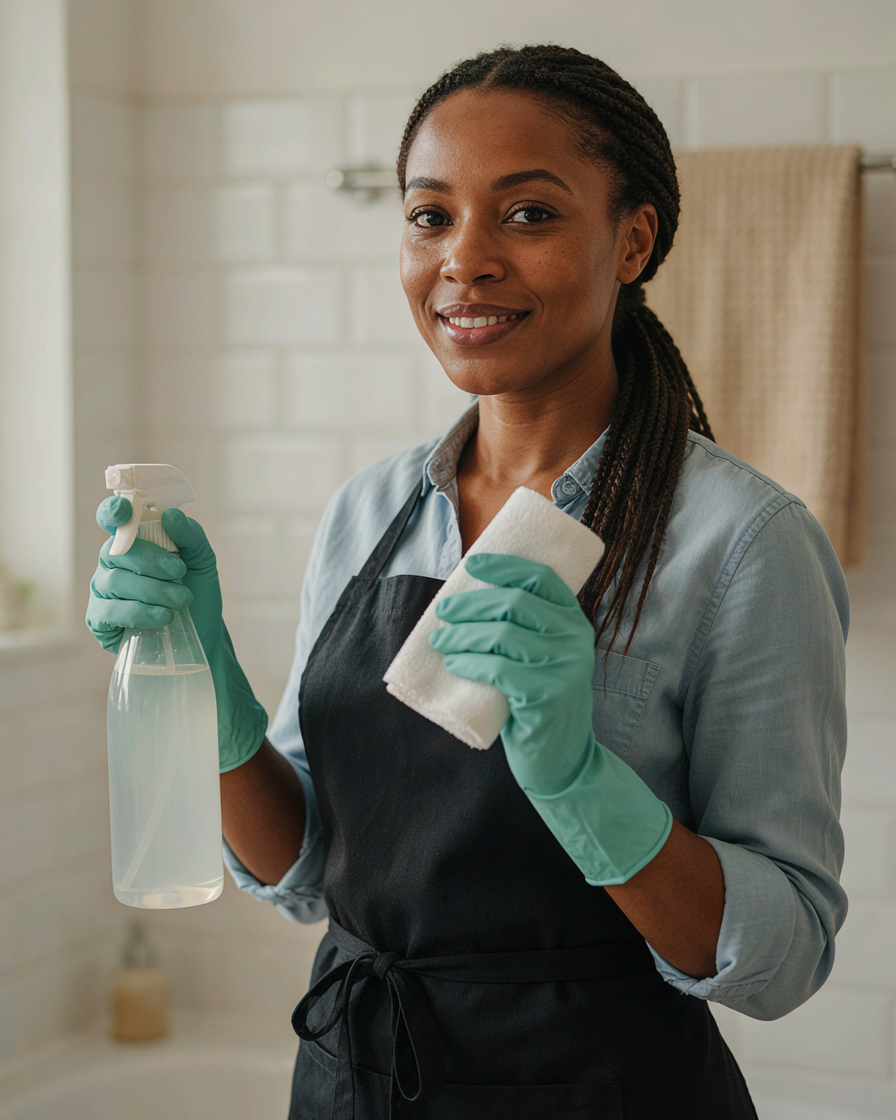
Clean where it counts. Scrub less.
When I started this job I thought a clean toilet was all about strong products and a lot of scrubbing. After thousands of bathrooms I can tell you it isn't. The bowls that stay clean are the ones where the product reaches under the rim and along the waterline, and where somebody does a little every week.
The bowls that look bad, with a ring that never leaves and a smell that comes back in two days, almost always have the same story: hard scrubbing once in a while, and nothing reaching the hidden spots. These are the three rules I work by.
The client who thought her toilet was ruined
A few years ago a new client showed me her guest bathroom and said, a little embarrassed, that she was thinking about replacing the toilet. There was a dark ring at the waterline and brownish marks under the rim that no amount of scrubbing had moved. She lived in an area with very hard water, and what she was looking at was mostly limescale with stains clinging to it.
We didn't replace anything. We switched to a product that could reach under the rim and sit on the buildup for a while, and she agreed to a short weekly routine between our visits. Over the next few weeks the ring faded and the smell stopped coming back. I have seen the same thing happen in many homes since, and it is the reason I care more about how a cleaner reaches the bowl than how strong it smells.
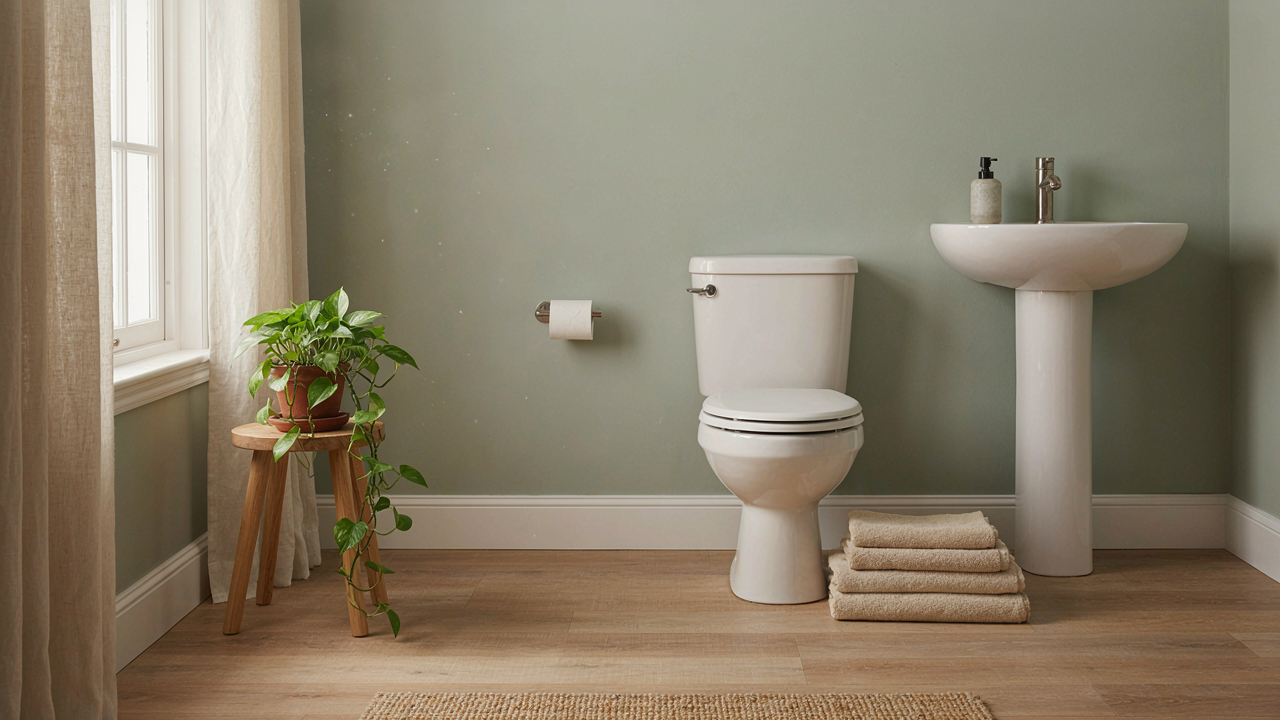
A clean toilet has less to do with how hard you scrub and more to do with what reaches the places you can't see.
A quick word on safety, because it matters more than any product. Never mix toilet cleaners with bleach, ammonia or other cleaning products, since some combinations release harmful fumes. Open a window, wear gloves, and keep all cleaners out of reach of children and pets. If anyone in your home has asthma, allergies or sensitive skin, check with your doctor and read the label carefully before trying something new.
What to look for in a toilet cleaner
These are the questions I ask before a new cleaner goes into my kit or a client's cabinet:
Does it reach under the rim? That is where a lot of the grime and smell hides. A cleaner that only coats the visible bowl leaves the real problem behind.
Does it handle limescale and hard-water stains? If you live with hard water, the waterline ring is mostly minerals. You need something made to loosen them, not just a nice scent.
Is it easy enough to use every week? The best routine is the one you keep. If it takes twenty minutes and a lot of elbow grease, it won't last.
Is it safe for my pipes or septic tank? Harsh products can be hard on older plumbing and septic systems. I look for a clear statement on the pack.
Is it available where I live? Many home products only ship to certain countries, so check before you get attached.
My current pick
I have tried a lot of toilet cleaners on the job. Measured against the checklist above, this is the one I recommend to clients right now.
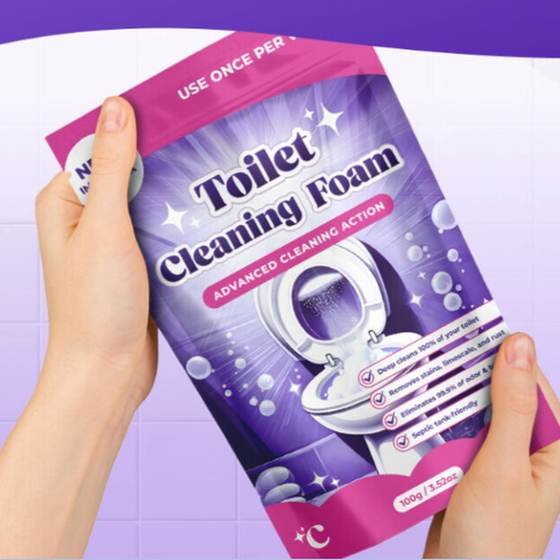
FizzClean Toilet Cleaning Foam
A powder you sprinkle into the bowl that turns into an active foam when it meets the water. The foam rises and spreads around the bowl and up under the rim, so it reaches the spots a brush usually misses. I tell clients to use one dose a week, let it work for a while, then give a quick brush and flush.
- Foaming action that spreads under the rim and along the waterline
- Helps lift stains, limescale and rust marks
- Made for a simple once-a-week routine and described as septic-tank friendly
- Currently ships to Germany; check availability for your country on the official page
Results vary with water hardness and how much buildup there is. Always follow the instructions on the pack.
More picks coming
I test new products on the job all the time. When I find something I would trust in a client's home, I'll add it here.
Questions I get asked
How often should I clean my toilet?
For most homes I recommend a proper clean of the bowl once a week and a quick wipe of the seat, lid and handle every few days. In a busy family home, the handle and seat need attention more often than the bowl.
What causes the brown or yellow ring in the bowl?
Usually a mix of minerals from hard water and residue that settles at the waterline. Once limescale builds up, stains cling to it, so regular cleaning stops it from getting thick and hard to remove.
Can I mix two cleaners for a stronger effect?
No. Mixing products, especially anything with bleach, ammonia or acids, can release harmful fumes. Use one product at a time, flush between products and keep the room ventilated.
Is a foam or powder better than a liquid gel?
Both can work. Gels cling to the sides of the bowl, while foams spread and rise, which helps them reach under the rim. The best one is the one you will actually use every week.
Some links on this page are affiliate links. If you buy through them, I may earn a small commission at no extra cost to you. This guide shares my own experience as a cleaner and is not a substitute for the manufacturer's instructions. Always read the product label and follow the safety instructions.